Maintainability in mechanical design should be considered from the earliest stages of the design process, not treated as a late-stage refinement. For complex systems like aero engines and gas turbines, decisions made during concept definition directly determine how accessible, serviceable, and cost-effective a machine will be throughout its operational life. The questions below address the most common points of uncertainty engineers face when integrating maintainability into the design process.
Why is maintainability harder to retrofit than to design in?
Retrofitting maintainability into a mechanical design is significantly harder because the decisions that most affect serviceability, component access, fastener placement, connector routing, and disassembly sequence are embedded in the structural architecture of the machine. Once those choices are locked in, changing them requires redesigning load paths, modifying housings, or requalifying assemblies, all of which carry substantial cost and schedule risk.
In practice, the difficulty compounds because structural and aerodynamic requirements tend to get resolved first, leaving maintainability as a secondary concern addressed only when a problem surfaces during prototype testing or early field operation. At that point, engineers are working within a fixed envelope. A panel that would ideally be bolted may already be welded. A component that needs frequent inspection may be buried beneath three others that were never designed to be removed in sequence.
The cost of correcting these problems grows rapidly as a program matures. Changes at the concept stage are relatively inexpensive. Changes during detailed design are more disruptive. Changes after the first hardware is built are expensive. Changes after entry into service can be prohibitively costly and may require fleet-wide modifications. Designing for maintainability from the start avoids that escalation entirely.
At what design phase should maintainability requirements be defined?
Maintainability requirements should be defined during the concept design phase, before any major architectural decisions are made. This is the point at which the overall layout of the system, the arrangement of major components, and the approach to assembly are still open questions. Defining access requirements, inspection intervals, and replacement strategies at this stage allows them to influence the architecture rather than compete with it.
At minimum, the following should be established before detailed design begins: which components are expected to require periodic inspection or replacement, what access is needed to perform those tasks, and what the acceptable downtime and tooling constraints are for the intended operating environment. For aerospace applications, these constraints are often defined by airworthiness regulations and operator maintenance programs, which means the requirements are not optional; they are contractual.
Waiting until the preliminary design review to address maintainability is a common mistake. By that stage, enough structural and aerodynamic decisions have been made that the design team is already working around constraints rather than setting them. The concept phase is the window where maintainability engineering has the greatest leverage.
What design decisions have the biggest impact on long-term maintainability?
Several categories of design decision have an outsized effect on long-term maintainability. Component accessibility is the most consequential: whether a part can be reached, inspected, and replaced without removing other assemblies determines the time and skill required for every maintenance event over the life of the machine.
Beyond access, the following decisions tend to define maintainability outcomes most strongly:
- Fastener standardization: Using a minimal set of fastener types reduces tooling requirements and the risk of incorrect reassembly.
- Modular architecture: Designing components as self-contained modules that can be swapped independently shortens maintenance time and allows off-equipment repair.
- Connector and interface design: Fluid, electrical, and pneumatic connections that are clearly labeled, physically distinct, and accessible without special fixtures reduce the chance of error during reassembly.
- Material selection for wear surfaces: Choosing materials with predictable wear behavior and designing wear surfaces to be replaceable without scrapping the parent component extends service life and reduces cost.
- Inspection access: Providing borescope ports, inspection windows, or defined visual reference points for wear limits reduces the need for disassembly during routine checks.
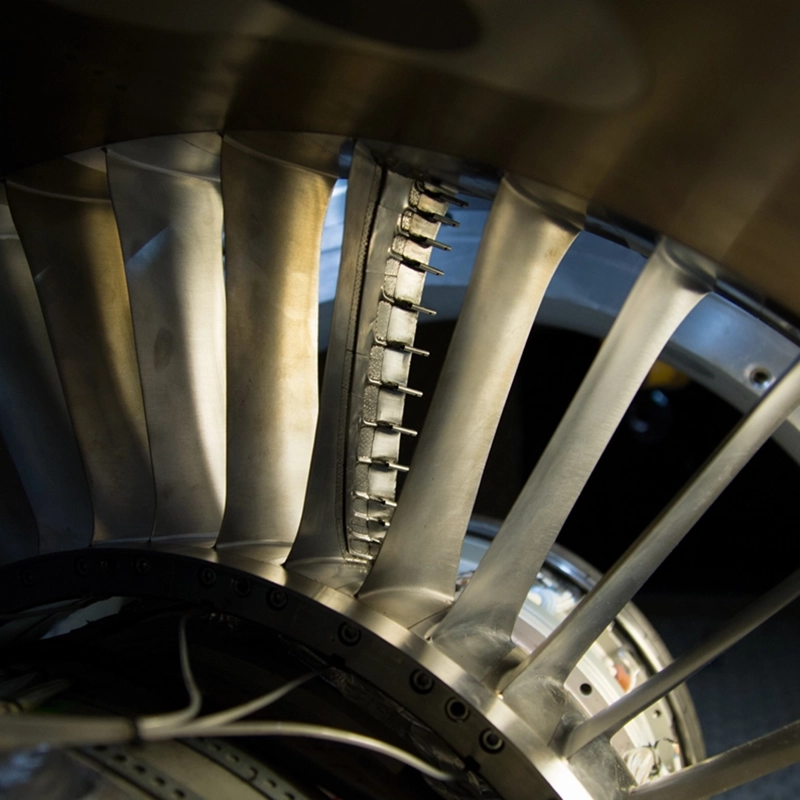
For gas turbines and aero engines specifically, the design of hot section components requires particular attention. Turbine blades, combustor liners, and seals are subject to thermal cycling and erosion, and their replacement intervals drive a significant proportion of total maintenance cost. Design decisions that simplify blade removal or combustor access have a measurable effect on operator economics over decades of service.
How does design for maintainability interact with structural and aerodynamic constraints?
Design for maintainability regularly comes into tension with structural and aerodynamic requirements, and resolving that tension requires explicit trade-off analysis rather than defaulting to one set of requirements over another. A cover panel that provides ideal maintenance access may introduce a stress concentration. A smooth aerodynamic surface may conceal a fastener pattern that would otherwise allow quick-release access.
These conflicts are not always resolvable in favor of maintainability, but they are manageable when they are identified early. The key is to make the trade-off visible and deliberate. If a structural requirement forces a component into a less accessible position, the design team can at least ensure that the access path is as clear as possible given the constraint and that the inspection or replacement procedure is validated before the design is frozen.
In gas turbine design, aerodynamic efficiency and thermal management requirements frequently dictate component geometry in ways that complicate maintenance. Combustor geometries optimized for mixing and emissions performance may create confined spaces around fuel injectors. Compressor blade profiles designed for aerodynamic performance may require specialized tooling for removal. Acknowledging these interactions during design, rather than discovering them during the first overhaul, is what separates a serviceable machine from one that is expensive to maintain despite being technically sound.
Who should be involved in maintainability decisions during the design process?
Maintainability decisions require input from a broader group than the core design team. At minimum, the people who will maintain the machine, whether operators, airline maintenance technicians, or depot-level engineers, should have a defined role in shaping access requirements and maintenance procedures. Their practical knowledge of what is feasible in the field is not replicated by analysis alone.
Beyond end users, the following roles contribute meaningfully to maintainability outcomes:
- Systems engineers who can translate operational requirements into design constraints early in the program
- Manufacturing engineers whose knowledge of assembly sequences directly informs disassembly logic
- Reliability and safety engineers who define inspection intervals and failure mode consequences
- Procurement and supply chain teams who can flag components with long lead times or limited repair options
- Test engineers who will validate the design before entry into service and can identify access problems during rig testing
The common failure mode is treating maintainability as the responsibility of a single specialist or a late-stage review team. When it is distributed across the design process and owned by multiple disciplines, conflicts are caught earlier and resolved at lower cost.
How is maintainability validated before a design enters service?
Maintainability is validated through a combination of analysis, physical mock-up assessment, and testing on representative hardware. No single method is sufficient on its own. Analysis can identify access conflicts and predict maintenance times, but it cannot replicate the ergonomic and procedural realities of working on actual hardware in realistic conditions.
Physical mock-ups, whether full-scale or partial, allow maintenance procedures to be walked through before manufacturing is complete. This is particularly valuable for identifying interference between tools and adjacent structure, verifying that connectors can be reached and operated by hand, and confirming that disassembly sequences are logical and reversible.
For aero engines and gas turbines, rig testing provides an additional validation opportunity. When components are assembled and disassembled repeatedly during a test program, the maintenance team accumulates direct experience with the design’s serviceability. Problems that analysis missed often surface during this phase, and corrections made at the rig stage are far less costly than those required after certification.
Formal maintainability demonstrations, where a defined maintenance task is performed to a documented procedure under controlled conditions and timed, are required by some customers and airworthiness authorities. These demonstrations produce objective data on maintenance time and task complexity that can be compared against requirements and used to support operator training development.
How AneCom supports maintainability-driven design and testing
AneCom AeroTest works with gas turbine and aero engine developers across the full development cycle, providing engineering services and test capabilities that directly support maintainability outcomes. Specific ways AneCom contributes include:
- Instrumentation and assembly of complex test vehicles, giving the engineering team direct exposure to access and assembly challenges before a design is finalized
- Aerothermal component testing for compressors, combustors, and turbine assemblies, generating validation data that informs maintenance interval planning
- Non-destructive testing services that support both in-service inspection programs and the development of inspection procedures during design validation
- Qualified repair services for turbine blades, supporting the broader goal of designing components that can be repaired rather than replaced
- Engineering support at customer sites worldwide, allowing AneCom’s team to engage directly with the operational context in which maintenance will be performed
If your development program needs testing and engineering support that accounts for long-term serviceability, get in touch with AneCom to discuss how we can contribute from the design phase through to validation.