
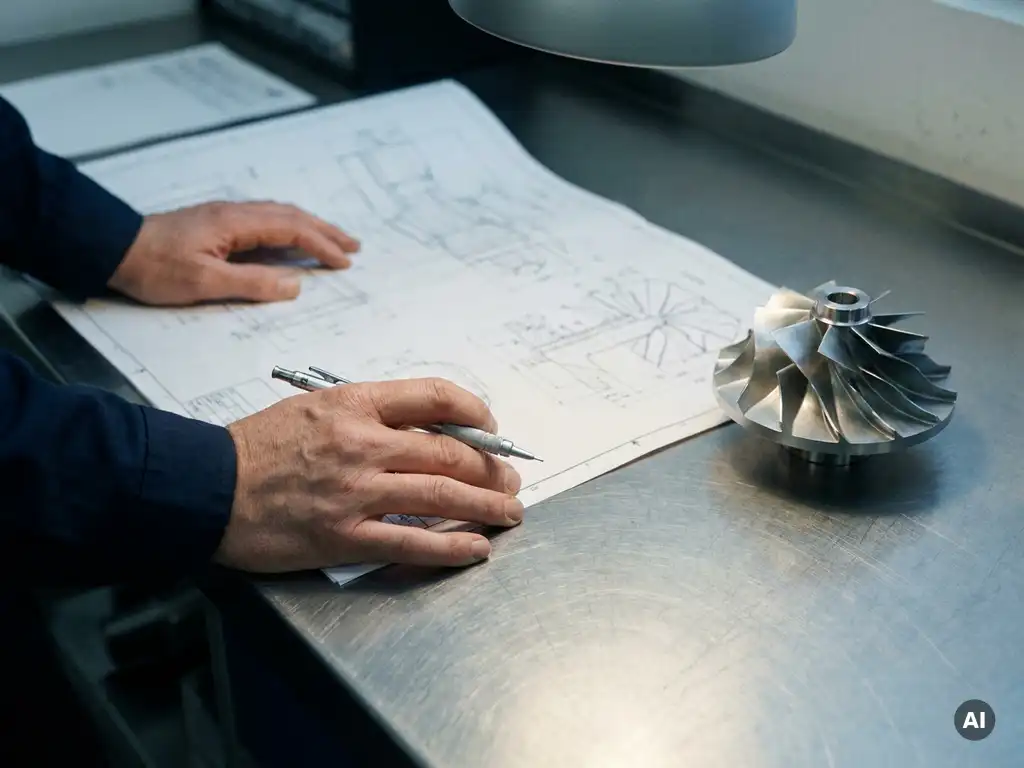
Engineers know a mechanical design is complete when it has satisfied all predefined acceptance criteria, passed the required verification and validation activities, and received formal sign-off from the relevant technical and programme authorities. Completion is not a single moment but the outcome of a structured process that runs from initial requirements through testing and review. The questions below unpack each stage of that process in detail.
What criteria define a mechanical design as ‘done’?
A mechanical design is considered done when it demonstrably meets every requirement captured in the design specification, including functional performance, dimensional tolerances, material properties, safety margins, and regulatory compliance. These acceptance criteria must be defined before design work begins, because “done” can only be measured against something concrete.
In practice, engineering acceptance criteria cover several categories. Performance requirements define how the component or system must behave under operating conditions. Structural requirements set limits on stress, fatigue life, and deflection. Manufacturing requirements confirm the design can be produced within the capabilities of the intended process. Compliance requirements verify that the design meets applicable standards, whether industry-specific codes, customer specifications, or regulatory frameworks.
A design that satisfies all documented requirements but lacks formal evidence of that satisfaction is not yet complete. Documentation, traceability, and recorded test data are part of what “done” means in a professional engineering context.
What is the role of design reviews in the sign-off process?
Design reviews are structured checkpoints where a cross-functional team examines the design against its requirements at defined stages of development. They serve as formal gates: the design cannot progress to the next phase without demonstrating sufficient maturity at each review. In the engineering design sign-off process, reviews create a documented trail of decisions and approvals.
Most programmes follow a sequence of reviews tied to development milestones. A preliminary design review assesses whether the chosen concept is feasible and whether the requirements are well defined. A critical design review, conducted later, confirms that the detailed design is ready for manufacture and that all technical risks have been addressed. A final design review or production readiness review then checks that manufacturing, assembly, and test plans are in place.
Each review generates action items. Open actions must be closed before the design advances. This discipline prevents problems from being carried forward into manufacture or test, where they become far more expensive to resolve.
How does design verification differ from design validation?
Design verification confirms that the design output meets the design input requirements, in other words, that the design was built correctly according to its specification. Design validation confirms that the finished product meets the needs of the end user or intended application, that the right thing was built. Both are required for mechanical design completion, but they answer different questions.
Verification activities typically include analysis, simulation, inspection, and component-level testing against documented requirements. An engineer might verify that a structural member meets its stress specification through finite element analysis and then confirm that result with a physical load test. Validation, by contrast, often involves system-level or operational testing under representative conditions, with the end user or customer involved in defining what success looks like.
In regulated industries such as aerospace, the distinction between verification and validation is codified in certification frameworks. A design that passes verification but fails validation has met its internal specification while failing to satisfy the actual need, which means the specification itself was incomplete.
What types of testing confirm a mechanical design is ready?
Several categories of testing contribute to confirming that a mechanical design is ready for release. The appropriate mix depends on the component type, the risk level, and the applicable standards, but most programmes draw from a common set of test types.
- Functional testing verifies that the design performs its intended function under nominal conditions.
- Environmental testing exposes the design to temperature extremes, vibration, humidity, or other conditions it will encounter in service.
- Structural and fatigue testing applies loads to confirm strength and durability over the expected service life.
- Performance testing measures output characteristics such as flow rates, pressure ratios, or efficiency against specification limits.
- Non-destructive testing (NDT) inspects for internal defects, cracks, or material anomalies without damaging the component.
For complex systems such as gas turbine components, aerothermal testing adds another layer, measuring how a component behaves under combined thermal and aerodynamic loads that cannot be fully replicated in analysis alone. Experimental testing services of this kind generate the empirical data that analytical models cannot provide with sufficient confidence for certification.
The results from all applicable test types are compiled into a test report that forms part of the design record. Without this documentation, the testing has limited value as evidence of design readiness.
When does a mechanical design reach ‘design freeze’?
Design freeze is the point at which the design is formally locked and no further changes are permitted without a controlled change management process. It typically occurs after the critical design review has been passed and before manufacturing drawings are released for production. At design freeze, the configuration is baselined and becomes the reference against which all subsequent changes are assessed.
Reaching design freeze requires that all open technical issues have been resolved or formally accepted, that the design has been verified against its requirements, and that the programme team has agreed the design is stable enough to commit to manufacture. Premature freeze introduces risk if significant unknowns remain; delayed freeze increases cost and schedule pressure downstream.
After design freeze, any proposed change must go through a formal change request process. The change is assessed for its impact on performance, interfaces, cost, and schedule before it is approved or rejected. This discipline protects the integrity of the design record and ensures that the tested and approved configuration is what actually gets built.
Who has the authority to sign off on a completed mechanical design?
Sign-off authority for a completed mechanical design typically rests with a combination of the responsible design engineer, a chief or lead engineer, and a programme or project manager, with additional sign-off required from quality assurance and, in regulated industries, from an independent certifying authority. The exact structure depends on the organisation, the programme, and the applicable regulatory framework.
In aerospace and defence programmes, certification authorities such as EASA or national airworthiness bodies may require that a designated engineering representative or approved design organisation formally approves the design before it enters service. This external sign-off is separate from internal programme approval and carries regulatory weight.
Within an engineering organisation, sign-off is rarely a single signature. It reflects a chain of accountability: the design engineer confirms technical correctness, the lead engineer confirms compliance with standards and requirements, quality assurance confirms that the review and test process was followed correctly, and programme management confirms that all programme commitments have been met. Each layer adds a different dimension of assurance.
How AneCom supports mechanical design completion in aerospace and turbine programmes
For development programmes involving gas turbine components, compressors, or aero-engine fans, reaching a complete and signed-off mechanical design depends on access to high-fidelity test data that analysis alone cannot deliver. AneCom AeroTest provides independent experimental testing services that generate the empirical evidence engineers need to close verification and validation activities with confidence.
- Aerothermal component testing for compressors, combustors, and turbine parts under representative operating conditions
- Acoustic testing in Europe’s largest anechoic chamber, producing free-field noise data for fan system validation
- Non-destructive testing services to inspect components for defects as part of acceptance and quality assurance
- Instrumentation, assembly, and test engineering from a single source, reducing interface risk across the test campaign
- Support for aerospace development programmes and defence applications requiring independent, documented test evidence
If your programme is approaching a critical design review or needs test data to support design freeze, contact AneCom AeroTest to discuss how experimental testing can be integrated into your sign-off process.
Related Articles
- What is the difference between a prototype and a proof of concept?
- What are the main stages of mechanical prototype development?
- When should maintainability be considered during mechanical design?
- How does mechanical design change for highly loaded rotating systems?
- What is Design for Manufacture in mechanical engineering?