
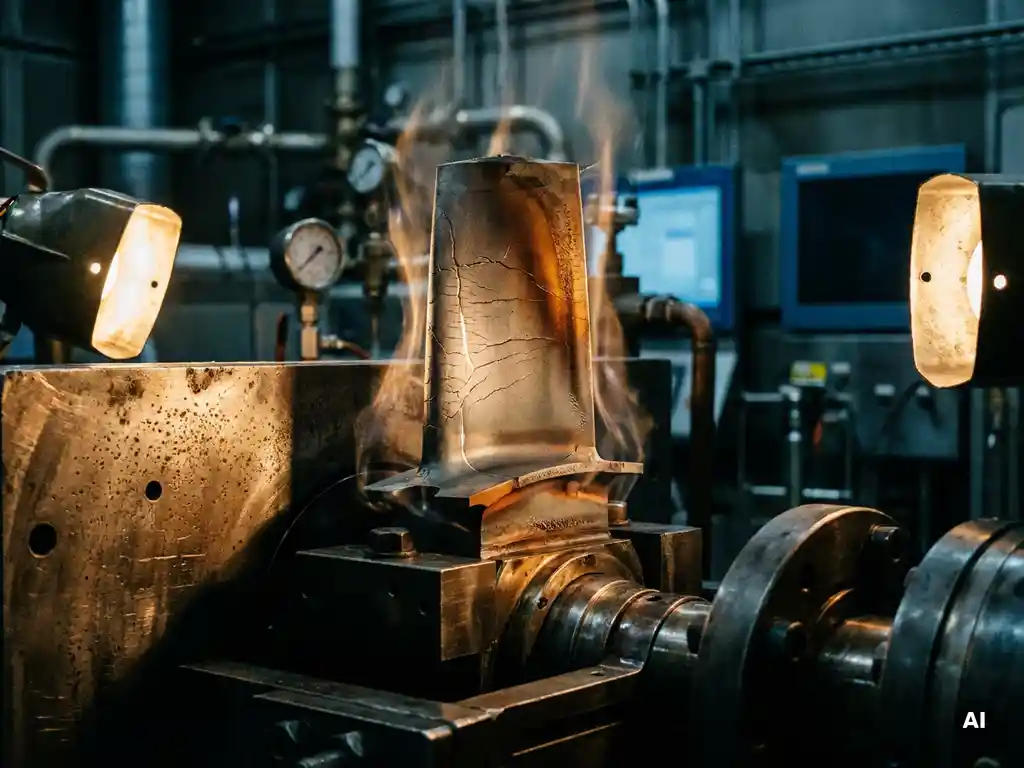
Accelerated life testing (ALT) is a structured testing method that applies elevated stress conditions to mechanical components in order to produce failures, or measurable degradation, within a compressed timeframe. Rather than waiting years for a component to wear out under normal operating conditions, engineers use ALT to gather durability and reliability data quickly. The sections below address the most common questions about how ALT works, what it reveals, and when to use it in a development programme.
How does accelerated life testing compress real-world wear into a test environment?
Accelerated life testing compresses real-world wear by exposing components to stress levels that are higher than those encountered in normal service, causing the same failure mechanisms to occur in a fraction of the time. The approach relies on an established relationship between stress magnitude and the rate at which material degradation, fatigue, or mechanical failure progresses.
The underlying principle is that most wear-related failure mechanisms follow predictable physical or chemical laws. Arrhenius models, for instance, describe how thermally driven degradation accelerates with temperature. Power-law models describe how mechanical fatigue damage accumulates with load amplitude. By selecting stress levels that remain within the component’s failure mode boundaries, engineers can generate failure data in weeks rather than years, then use these models to translate the compressed test results back into equivalent service life estimates.
The key constraint is that the dominant failure mechanism must remain the same under elevated stress as it would be in service. If stress levels are pushed so high that they introduce a different failure mode, the data loses its predictive value. Careful pre-test analysis of the component’s expected failure behaviour is therefore a prerequisite for any valid accelerated life test.
What types of stress are used in accelerated life testing?
Accelerated life testing uses mechanical, thermal, environmental, or combined stress types, selected based on the failure mechanisms most relevant to the component under test. The choice of stress type must reflect the actual operating conditions the component will face in service.
For mechanical components in rotating machinery, the most common stress types include:
- Cyclic mechanical load, applied at elevated amplitude or frequency to accelerate fatigue crack initiation and propagation
- Elevated temperature, which accelerates oxidation, creep, and thermally driven material degradation
- Vibration, used to replicate resonance-driven wear or joint fretting
- Pressure cycling, applied to components such as seals, housings, or flow-path structures that experience fluctuating internal loads
- Combined thermomechanical loading, which simultaneously applies temperature and mechanical stress to replicate the coupled effects found in gas turbine hot-section components
In aerospace applications, combined stress profiles are particularly important because aero engine components rarely experience a single stress type in isolation. A turbine blade, for example, is simultaneously subject to centrifugal load, thermal gradients, and aerodynamic pressure fluctuations. ALT programmes for such components typically use multi-axis stress profiles to replicate this interaction faithfully.
What is the difference between accelerated life testing and accelerated stress testing?
Accelerated life testing is designed to generate quantitative life and reliability data by applying known, controlled stress levels based on a physical model of the expected failure mechanism. Accelerated stress testing, by contrast, applies stress without a predefined model, with the goal of discovering unknown failure modes or design weaknesses rather than estimating service life.
The distinction matters in practice. ALT is a quantitative method: the stress levels are chosen so that results can be mathematically extrapolated to predict how long a component will survive under normal operating conditions. This requires a prior understanding of the dominant failure mechanism and a validated acceleration model.
Accelerated stress testing, which includes methods such as highly accelerated life testing (HALT), is exploratory. Stress is escalated progressively until failures occur, often beyond the component’s design limits, to expose latent weaknesses in design, materials, or manufacturing. The results identify vulnerabilities but do not directly yield service life predictions.
Both approaches have a place in a component development programme, but they serve different purposes. ALT belongs later in the development cycle, when the design is sufficiently mature to generate meaningful reliability data. Accelerated stress testing is more useful early on, when the goal is to stress-screen a design and eliminate failure modes before committing to a production configuration.
What failure modes does accelerated life testing reveal in mechanical components?
Accelerated life testing is effective at revealing fatigue-driven failure modes, including high-cycle and low-cycle fatigue cracking, surface wear, fretting at contact interfaces, creep deformation under sustained load, and thermally driven degradation such as oxidation or coating spallation. These are the failure modes that accumulate progressively with repeated stress cycles.
For rotating components in gas turbines and aero engines, the failure modes of greatest concern tend to be low-cycle fatigue from start-stop pressure and temperature cycling, high-cycle fatigue driven by aerodynamic excitation, and creep in high-temperature sections where material strength is reduced. ALT programmes targeting these components are structured to replicate the stress cycles that drive each mechanism, at elevated amplitude or rate, so that the relevant damage accumulates within the test window.
ALT is less suited to revealing failure modes that are stochastic or highly sensitive to manufacturing variation, such as certain types of brittle fracture or contamination-driven corrosion, because these do not follow the same deterministic acceleration relationships. Identifying such modes typically requires different test strategies, including large sample testing or environmental exposure testing.
When should accelerated life testing be used in a component development programme?
Accelerated life testing is most appropriate once a component design is mature enough to have a defined geometry, material specification, and manufacturing process, but before it enters full production or service. At this stage, ALT provides quantitative reliability data that supports design validation and certification.
Earlier in development, when significant design changes are still likely, the investment in a full ALT programme may not be justified. Exploratory stress testing or analytical fatigue modelling is typically more efficient at that stage. Once the design is frozen and the question shifts from “will this design survive?” to “how long will it survive, and with what probability?”, ALT becomes the appropriate tool.
For gas turbine components, ALT is often required as part of the regulatory or customer qualification process. Component fatigue testing under accelerated conditions provides the empirical evidence needed to support life limits, inspection intervals, and overhaul schedules. In this context, ALT is not optional: it is a defined step in the validation pathway.
ALT is also appropriate when a component is redesigned, when a material substitution is made, or when a manufacturing process change is introduced that could affect fatigue behaviour. Any change that alters the stress-life relationship of the component warrants a reassessment of its durability through accelerated testing.
How are accelerated life test results validated against real service data?
Accelerated life test results are validated by comparing the failure modes, damage patterns, and life predictions generated during testing against observations from components that have accumulated real service hours. Where service data exists, it provides a direct check on whether the acceleration model correctly predicted the rate and nature of degradation.
The validation process typically involves teardown inspection of service-run components at defined intervals. Engineers compare the location, morphology, and progression of damage in service-run parts against what was observed in ALT specimens. If the failure modes match and the life predictions fall within an acceptable margin of the observed service life, the acceleration model is considered validated.
Where service data is limited, which is common for new components or novel materials, validation relies on a combination of analytical cross-checks. Finite element fatigue models are compared against ALT results, and the acceleration factors derived from the test are benchmarked against published material data or data from analogous components tested previously.
The reliability of this validation process depends heavily on the quality of the test instrumentation and data acquisition during ALT. Precise measurement of the applied stress, the component’s response, and the progression of damage throughout the test is what makes it possible to build and refine the models that connect test conditions to real service behaviour. This is an area where test facility capability directly affects the quality of the engineering conclusions that can be drawn.
How AneCom supports mechanical component validation through accelerated testing
AneCom AeroTest provides end-to-end testing and engineering support for aerothermal component validation, with particular depth in compressor, fan, combustor, and turbine testing for the aero engine and gas turbine industries. For programmes that require accelerated durability data, AneCom brings together several capabilities that are difficult to find at a single independent facility:
- Instrumented test benches with modular measurement systems that capture high-resolution stress, temperature, and flow data throughout the test
- Engineering services covering design, analysis, and instrumentation, so that test programmes are built on a thorough understanding of the component’s expected failure behaviour
- Europe’s largest anechoic chamber, available for fan system testing under acoustically controlled conditions that replicate free-field environments
- Non-destructive testing services for post-test inspection and damage assessment of tested components
- Access to combustor and turbine test capabilities through established cooperation partners
AneCom operates as an independent service provider, which means test programmes are structured around the engineering question rather than around a fixed product portfolio. If you are planning a component fatigue testing or accelerated durability testing programme, contact AneCom to discuss how the facility’s capabilities can be matched to your validation requirements.
Related Articles
- How do engineers evaluate repeatability and reproducibility in component testing?
- What does a prototype engineer do during product development?
- When should a mechanical concept be rejected?
- Why are interfaces critical in rotating machinery design?
- What is the difference between Design for Manufacture and Design for Assembly?