
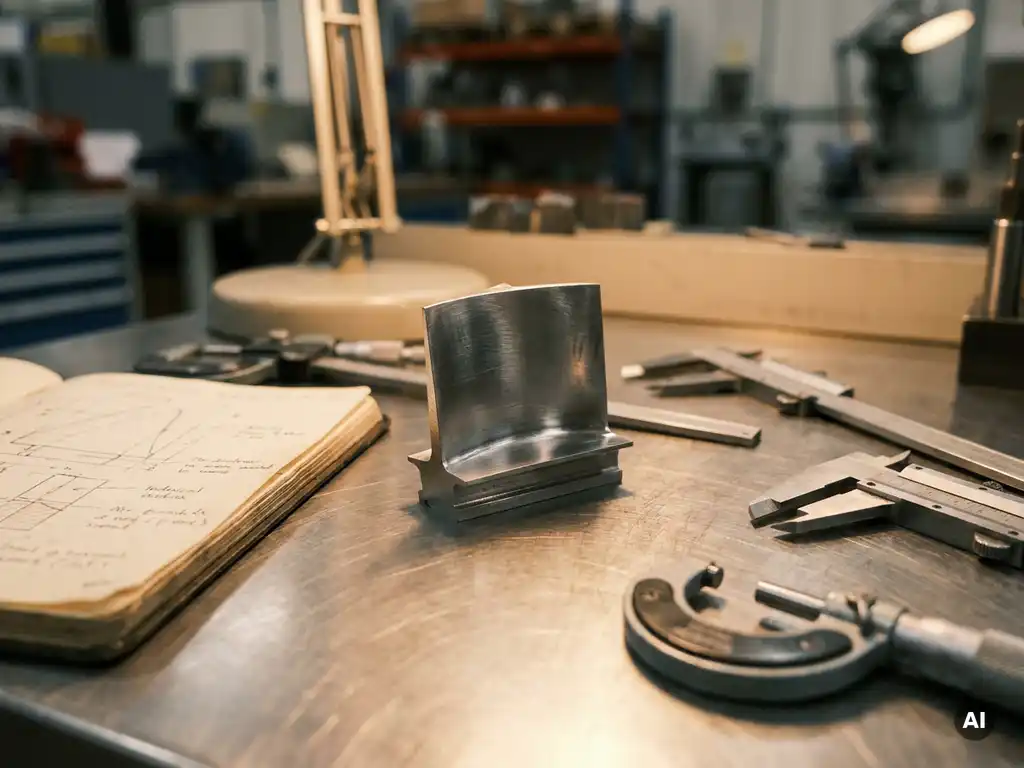
Engineers should build a physical prototype when simulation alone cannot fully validate real-world behavior, when physical interactions between materials, fluids, or mechanical loads introduce variables that models cannot reliably capture, or when regulatory and customer requirements demand empirical test data. The decision is rarely about simulation versus hardware; it is about identifying the specific unknowns that only a physical test can resolve.
For most engineering programs, prototyping remains a necessary step even when computational tools are highly mature. The questions below unpack the specific conditions, trade-offs, and decision criteria that guide that choice.
What are the main reasons engineers still build physical prototypes?
Engineers build physical prototypes to validate behavior that cannot be predicted with sufficient confidence through simulation alone. Physical hardware reveals manufacturing variation, assembly tolerances, material response under real loads, and emergent interactions between components that models either simplify or omit entirely. A prototype also provides the empirical baseline against which simulation models are calibrated and trusted.
Beyond validation, prototypes serve communication and alignment functions. A physical object lets stakeholders, customers, and regulatory bodies evaluate form, fit, and function in ways that a rendered model or simulation output cannot replicate. In industries where certification requires demonstrated performance, hardware evidence is not optional.
There is also a discovery dimension. Engineers frequently learn things from a first physical build that were not anticipated during the design phase. Vibration modes, thermal gradients, fluid flow patterns, and acoustic behavior can all behave differently in hardware than in a model, and catching those surprises at the prototype stage is far less costly than encountering them during production or field operation.
When is simulation alone not enough for engineering validation?
Simulation alone is not sufficient when the phenomena being studied involve high physical complexity, strong coupling between multiple domains, or boundary conditions that are difficult to characterize accurately. Turbulent flow, contact mechanics, nonlinear material behavior, and acoustic propagation in complex geometries are all areas where simulation results carry meaningful uncertainty that only test data can bound.
Simulation also depends entirely on the quality of the inputs fed into it. If material properties, manufacturing tolerances, or environmental conditions are not well characterized, the model output inherits that uncertainty. A physical test does not require those assumptions in the same way; it measures the actual system response.
In aerospace engineering, this limitation is particularly consequential. Aerothermal testing of compressor stages, combustion chambers, and turbine components involves coupled fluid dynamics, heat transfer, and structural response at conditions that are genuinely difficult to replicate in a model with the fidelity required for certification. Physical test data from those components is not a supplement to simulation; it is the primary evidence base.
What’s the difference between a prototype and a production-representative test article?
A prototype is a physical build used to explore, learn, and validate design intent, often manufactured using methods or materials that differ from the final production process. A production-representative test article is built using the same processes, materials, and tolerances as the intended final product, so that test results can be directly applied to the production configuration without adjustment or extrapolation.
The distinction matters because a prototype can answer the question “does this design concept work?” while a production-representative article answers “does this specific manufactured product meet its requirements?” These are different questions, and conflating them leads to validation gaps that surface later in the program.
In practice, many development programs use both. Early-stage prototypes explore the design space and identify major risks. Later, production-representative articles provide the formal evidence needed for qualification, certification, or customer acceptance. The transition between the two is a deliberate program milestone, not an automatic step.
How do engineers decide between early-stage and late-stage prototyping?
The timing of a prototype build depends on what question needs to be answered and how much uncertainty the program can tolerate at that point. Early-stage prototyping is appropriate when the design space is still open and the goal is to generate information that will shape design decisions. Late-stage prototyping is appropriate when the design is largely fixed and the goal is to confirm that it meets defined requirements.
Early builds are typically lower fidelity and lower cost. They accept manufacturing imperfections and use simplified test setups because the goal is directional insight, not precise measurement. Late-stage builds require much higher fidelity because the results will be used to make formal decisions about the product.
The risk profile of the program also influences timing. High-consequence failure modes, long manufacturing lead times for critical components, or tight schedule constraints all push toward earlier physical testing. Programs with well-established design heritage and mature simulation tools can afford to delay hardware builds longer without accumulating unacceptable risk.
What factors determine the cost of building an engineering prototype?
The cost of an engineering prototype is driven by material and manufacturing complexity, the fidelity required to answer the target question, the instrumentation needed to capture useful data, and the test environment required to replicate relevant operating conditions. Each of these factors can vary by orders of magnitude depending on the application.
Material and manufacturing cost scales with the complexity of the geometry, the properties of the materials involved, and whether the build requires specialized processes such as precision machining, casting, or additive manufacturing. A structural bracket prototype costs far less than a multi-stage compressor rig.
Instrumentation and test infrastructure are often underestimated. Measuring pressure, temperature, flow, strain, vibration, and acoustic output at the resolution needed for useful data requires significant investment in sensors, data acquisition systems, and facility time. For aerothermal component testing, the test facility itself, including the air supply, drive systems, and thermal management, can represent the largest single cost element in the program.
Should engineers prototype every component or only critical subsystems?
Engineers should prioritize prototyping for components and subsystems where failure consequences are severe, where simulation confidence is low, or where the design involves genuinely novel features without established precedent. Prototyping every component is rarely justified on cost or schedule grounds, and the resources are better concentrated on the highest-risk areas of the system.
A structured risk assessment at the start of the development program is the most reliable way to make this determination. Components with well-characterized behavior, established design heritage, and high simulation confidence can often be validated through analysis alone or through system-level testing rather than dedicated component tests.
The interdependencies between components also matter. Some components that appear low-risk in isolation behave differently when integrated into the full system, particularly where thermal, structural, or aerodynamic interactions are significant. System-level prototype testing can sometimes replace a larger number of individual component tests when those interactions are the primary source of uncertainty.
How AneCom supports engineering prototype testing
AneCom AeroTest provides independent test and validation services for engineers who need physical prototype data at the component and system level. The company’s capabilities are directly relevant to programs where simulation must be grounded in empirical evidence from hardware:
- Aerothermal component testing for compressors, combustors, and turbine parts using dedicated test facilities at the Compressor Test Center in Wildau
- Fan system acoustic validation in Europe’s largest anechoic chamber, which suppresses wall reflections below 1% across a wide frequency range and replicates free-field conditions without weather dependence
- Full-scope engineering services, including design, instrumentation, assembly, and testing delivered from a single source, including at customer sites
- Non-destructive testing and support for maintenance of complex machines and assemblies
- Testing support for programs in aerospace, defence, and power generation where certification demands empirical validation data
If your program has reached the point where physical test data is needed to validate a design or support a certification case, contact AneCom AeroTest to discuss your test requirements and how the facility can be configured to meet them.