
Prototype engineering and production engineering are two distinct phases of the product development process. Prototype engineering focuses on proving that a concept works, while production engineering focuses on making that concept manufacturable at scale, consistently and cost-effectively. The two disciplines share common ground in design and analysis, but they operate under fundamentally different constraints, priorities, and success criteria. The questions below unpack the key differences across both stages.
How does prototype engineering differ from production engineering in practice?
In practice, prototype engineering is exploratory and iterative, while production engineering is systematic and repeatable. A prototype engineer asks whether a design performs as intended. A production engineer asks whether that design can be manufactured reliably, at volume, within cost and time constraints. Both roles require deep technical knowledge, but they are optimized for entirely different outcomes.
During prototype development, engineers work with incomplete information. Designs change frequently, test results drive revisions, and the priority is learning quickly rather than building efficiently. A prototype may be assembled by hand, use non-standard materials, or require specialist tooling that would never survive in a production environment. The goal is validation, not repeatability.
Production engineering takes a validated design and reengineers it for the real world of manufacturing. This means defining precise tolerances, selecting materials that are both available and cost-effective at scale, qualifying suppliers, and creating the documentation and processes that allow consistent output across thousands or millions of units. Where prototype engineering tolerates variation, production engineering eliminates it.
What are the main goals of prototype engineering?
The primary goal of prototype engineering is to validate whether a design concept performs as expected under real or simulated conditions. This encompasses functional validation, performance characterization, and failure mode identification. A successful prototype does not need to be cheap or easy to build; it needs to generate reliable data that informs the next stage of development.
In sectors like aerospace engineering, prototype testing serves a specific and demanding purpose. Aerothermal components such as compressors, combustors, and turbine stages must be tested experimentally before any design is committed to production. The data gathered during prototype testing feeds directly into design refinements, and in many cases, multiple prototype iterations are required before a design is ready to progress.
Beyond performance, prototype engineering also aims to identify risks early. Discovering a design flaw during prototype testing is expensive in time but far less costly than discovering it after production tooling has been commissioned. This is why prototype engineering is characterized by tight feedback loops between testing, analysis, and redesign.
What does production engineering focus on that prototype engineering does not?
Production engineering focuses on manufacturability, process control, supply chain integration, and cost optimization. These considerations are largely irrelevant during prototype development, where the priority is functional performance rather than economic viability at scale.
A production engineer must account for how a part will be made by machines or assembly lines, not by skilled technicians working by hand. This requires designing for the capabilities and limitations of manufacturing processes, whether that means adjusting geometry for CNC machining, specifying surface finishes that are achievable in production, or selecting fasteners that are available from multiple qualified suppliers.
Quality systems also become central in production engineering. Inspection plans, statistical process control, and traceability documentation are built around the production design. None of these systems exist in a meaningful way during prototype work, where the goal is to build and test quickly, not to demonstrate repeatable compliance.
Why do tolerances and materials change between prototype and production?
Tolerances and materials change between prototype and production because the constraints governing each stage are different. Prototype tolerances are often tighter than necessary, or simply whatever the prototype machinist can achieve, because the focus is on performance data rather than manufacturing efficiency. Production tolerances are set to balance functional requirements against what can be achieved reliably and economically at scale.
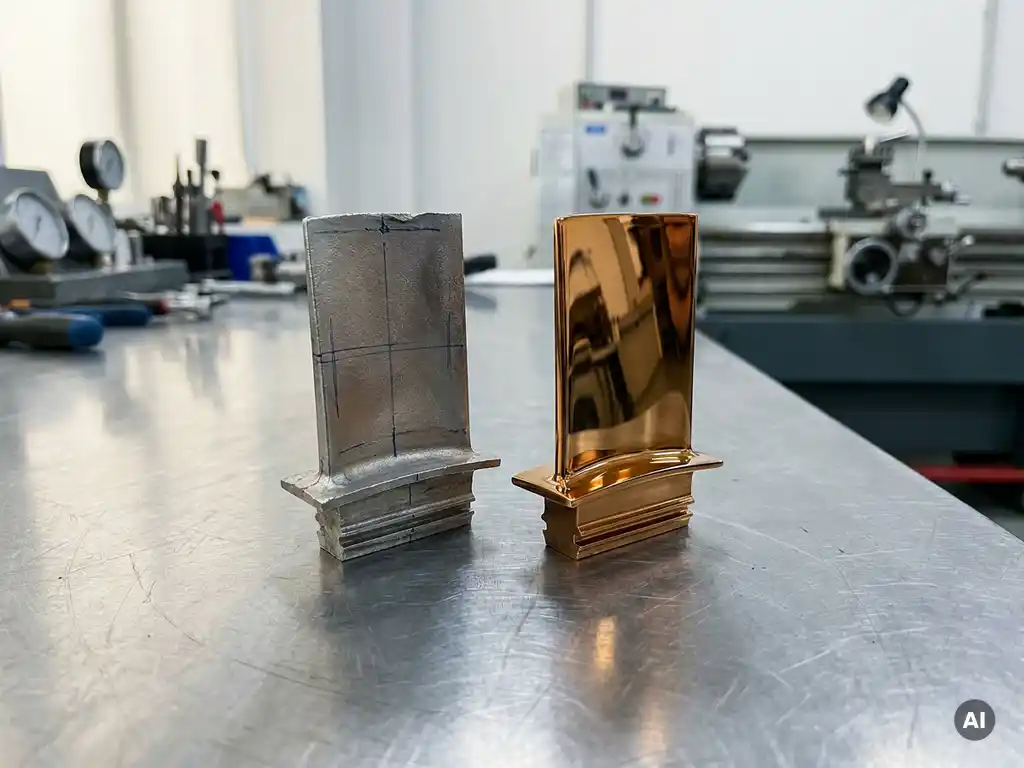
Materials follow a similar logic. Prototype components are sometimes made from materials that are easy to machine or modify quickly, even if those materials would be impractical or too expensive in volume production. A prototype blade might be machined from a billet that would never be used in series production, simply because it allows faster iteration. The production version will use a material selected for its combination of performance, availability, and cost over the product’s full manufacturing life.
In gas turbine engineering, this transition is particularly significant. High-temperature alloys used in turbine components must meet strict performance requirements, but the specific alloy grade, heat treatment, and manufacturing route chosen for production may differ from what was used in prototype testing. Part of the engineering work during the transition phase is verifying that the production material and process combination still delivers the validated performance.
When does an engineering project move from prototype to production?
An engineering project moves from prototype to production when the design has been sufficiently validated, known risks have been addressed, and the manufacturing process has been qualified. In practice, this transition is not a single event but a structured gate process, often involving design reviews, test sign-offs, and formal approvals from both engineering and business stakeholders.
The readiness criteria vary by industry and application. In aerospace and defense, the bar is exceptionally high. Regulatory certification, safety case documentation, and independent verification are typically required before any component enters production. A design that performs well in prototype testing may still require additional development cycles if the production process cannot be shown to deliver consistent results.
The transition also depends on commercial factors. A design may be technically ready for production but delayed because tooling investment cannot be justified until order volumes are confirmed. Conversely, schedule pressure can sometimes push a design into production before all prototype learning has been fully incorporated, which carries its own risks.
What engineering disciplines are involved in each stage?
Both prototype and production engineering draw on a broad range of disciplines, but the balance shifts significantly between the two stages. Prototype engineering is dominated by design, analysis, instrumentation, and test engineering. Production engineering brings in manufacturing engineering, quality engineering, supply chain management, and industrial engineering.
During prototype development, aerodynamic and thermodynamic analysis drives design decisions. Instrumentation engineers develop measurement systems to capture the data the tests are designed to generate. Test engineers plan and execute the experimental program, often working closely with design teams to interpret results and feed them back into the design process.
As a project moves toward production, the emphasis shifts. Manufacturing engineers assess how the design can be produced at scale and what process changes are needed. Quality engineers define inspection and acceptance criteria. In sectors such as aerospace, non-destructive testing becomes a formal part of the production workflow rather than an ad hoc tool used during prototype investigation.
How AneCom supports the transition from prototype to production engineering
AneCom AeroTest provides engineering services that span both the prototype and production engineering stages, with particular depth in the experimental validation work that connects the two. For gas turbine OEMs and defence industry customers, this means access to a full range of capabilities from a single source:
- Aerothermal component testing for compressors, combustors, and turbine stages, generating the validated performance data that prototype engineering requires
- Fan and compressor testing in Europe’s largest anechoic chamber, providing acoustic and aerodynamic characterization under controlled, weather-independent conditions
- Design and analysis services that support both prototype development and the design refinements needed for production readiness
- Instrumentation and assembly expertise applied to complex test vehicles and associated test equipment
- Non-destructive testing services that support both prototype investigation and production quality workflows
Whether your program is in early prototype validation or preparing for production qualification, AneCom AeroTest has the facilities and engineering expertise to support the work. Contact the team to discuss your testing and development requirements.
Related Articles
- How do engineers design representative load cases for component validation?
- What is accelerated life testing in mechanical component validation?
- How do you interpret the results of a Pugh matrix?
- What are the most common mistakes during mechanical concept development?
- Why are tolerances important on mechanical engineering drawings?