
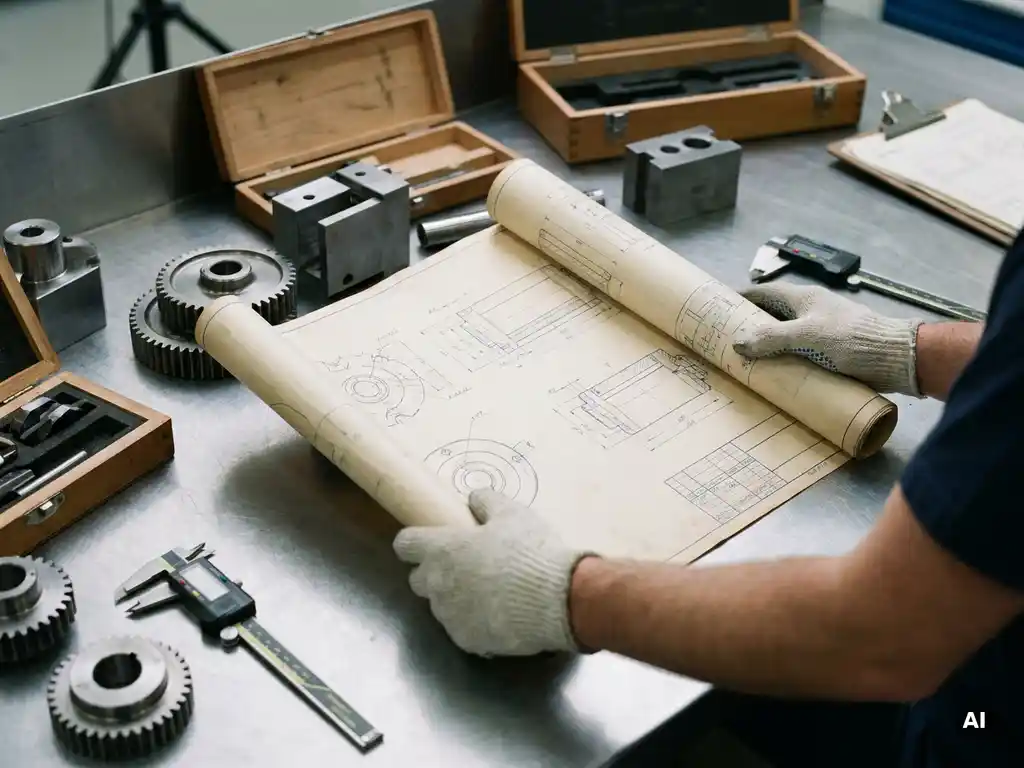
The mechanical concept design phase is where engineers translate a set of requirements into a viable physical approach, selecting geometries, materials, and load paths before any detailed calculations are committed. It sits early in the development process, typically after requirements have been defined and before detailed design begins. The sections below address the most common questions that arise at this stage of the mechanical design process.
What are the key activities in the mechanical concept design phase?
The mechanical concept design phase covers the generation, evaluation, and selection of candidate design approaches that could satisfy the defined requirements. Engineers produce multiple concept variants, assess their feasibility, and converge on a preferred direction without yet committing to precise dimensions or tolerances.
The core activities include functional decomposition, where the overall system function is broken into sub-functions that individual components must perform. From there, teams generate concept variants for each sub-function, often using structured methods such as morphological analysis or function trees to avoid anchoring too early to a single idea.
Once a range of concepts exists, screening and scoring methods are applied to compare them against weighted criteria drawn directly from the requirements. The output is typically a preferred concept, supported by a rationale document that records why alternatives were set aside. Preliminary stress estimates, basic thermal assessments, and rough mass budgets are also produced at this stage to confirm that the preferred concept is physically plausible before detailed design resources are committed.
How does concept design fit into the broader engineering development process?
Concept design sits between the requirements definition phase and the detailed design phase in the engineering development process. It is the stage where abstract requirements become concrete physical ideas, but where the level of definition is still coarse enough that significant changes remain affordable.
In established development frameworks, such as those used across aerospace engineering, concept design typically follows a preliminary design review and precedes a critical design review. This sequencing exists because decisions made during concept design have a disproportionate effect on downstream cost and performance. Changing a load path or a material family at the concept stage costs far less than making the same change after detailed drawings have been released.
Concept design also sets the boundaries within which detailed designers work. The chosen architecture, the selected manufacturing route, and the identified interfaces all become constraints that the detailed design phase must respect. This is why the quality of concept design work has a compounding effect throughout the rest of the programme.
What design inputs are needed before concept design can begin?
Before concept design can begin, the team needs a validated set of requirements, a clear definition of the operating environment, and an understanding of any system-level constraints that will bound the solution space. Without these inputs, concept generation produces ideas that cannot be meaningfully compared.
The minimum required inputs typically include functional requirements, which describe what the component or system must do; performance targets, which quantify how well it must do it; and interface definitions, which specify how the component connects to adjacent systems. For gas turbine and aero engine components, operating conditions such as pressure ratios, temperature ranges, rotational speeds, and mechanical loads are also essential inputs, since they directly govern which materials and geometries are viable.
Regulatory and certification requirements must also be in hand before concept work begins. In gas turbine development, airworthiness standards constrain design choices in ways that cannot be retrofitted late in the process. Concept teams that begin without regulatory clarity frequently find that their preferred concept violates a certification requirement that was discoverable from the outset.
How are design trade-offs evaluated during concept design?
Design trade-offs during concept design are evaluated by comparing candidate concepts against a set of weighted criteria that reflect the priorities embedded in the requirements. The most widely used structured approach is a trade study, in which each concept is scored against criteria such as mass, manufacturability, thermal performance, cost, and development risk.
The weighting of criteria is as important as the scoring itself. A concept that scores highest on raw performance but poorly on producibility may be the wrong choice for a programme with tight cost constraints. Trade studies make these tensions explicit and create a documented record of the reasoning, which is valuable when stakeholders question the chosen direction later in the programme.
Beyond formal scoring, engineering judgement plays a significant role. Experienced engineers recognise when a concept is technically sound on paper but carries hidden integration risks, or when a lower-scoring concept has practical advantages that the scoring matrix does not fully capture. The most effective concept design teams combine structured trade methods with the kind of domain experience that comes from having tested and analysed similar systems previously.
What are the most common risks that emerge during mechanical concept design?
The most common risks that emerge during the mechanical concept design phase are requirements misinterpretation, premature convergence on a single concept, and insufficient attention to interface definition. Each of these can propagate into detailed design and become significantly more expensive to resolve.
Requirements misinterpretation occurs when the design team works from an incomplete or ambiguous requirements set and makes assumptions that later prove incorrect. This is particularly common when requirements are inherited from a system-level specification and translated into component-level targets without a formal verification step.
Premature convergence happens when a team settles on a preferred concept before the alternatives have been genuinely explored. This often occurs under schedule pressure, and it carries the risk that a superior concept was never considered. A related issue is anchoring, where the first concept generated receives disproportionate attention simply because it was first.
Interface definition gaps are a persistent source of risk in complex assemblies. If the concept design phase does not produce clear interface control documents, different sub-teams may develop components that are individually sound but incompatible at the assembly level. In rotating machinery and high-pressure systems, interface mismatches discovered late in the programme can require significant redesign.
When does concept design end and detailed design begin?
Concept design ends when a preferred concept has been selected, its feasibility confirmed at a high level, and the design has been reviewed and approved through a formal gate, typically a preliminary design review. Detailed design begins once that gate is passed and the team has a stable concept to develop further.
The transition is defined not just by the calendar but by the state of the design. A concept is ready for detailed design when the architecture is fixed, the key interfaces are defined, the major technical risks have been identified and assigned to risk reduction activities, and the requirements the concept must meet are agreed and baselined.
In practice, the boundary between concept and detailed design is not always sharp. Some elements may enter detailed design while others remain in concept refinement, particularly in large programmes with many sub-systems. What matters is that no element moves into detailed design until its concept is stable, because detailed design effort applied to an unstable concept is typically wasted when the concept changes.
How AneCom supports the mechanical design process
AneCom AeroTest provides engineering development services that span the mechanical design process, from early concept assessment through to experimental validation. For programmes involving compressors, fans, combustors, or turbine components, AneCom’s team brings direct experience in the decisions that define concept design for aero engine and gas turbine applications.
- Design and analysis services covering structural, aerothermal, and acoustic assessments to support concept trade studies
- Instrumentation and assembly expertise that informs manufacturing and interface decisions at the concept stage
- Access to test facilities, including compressor test benches and Europe’s largest anechoic chamber, for experimental validation of concept-stage assumptions
- Non-destructive testing and component inspection capabilities that feed back into design decisions
- Engineering support available both at AneCom’s Wildau facility and at customer sites worldwide
If you are working through a concept design phase for an aero engine or gas turbine component and need engineering support or test capacity, contact AneCom AeroTest to discuss how the team can contribute to your programme.
Related Articles
- What makes a mechanical design concept technically feasible?
- How many design concepts should engineers evaluate before selecting one?
- What information is needed before mechanical concept design can begin?
- What happens during the detailed mechanical design phase?
- What is Design for Assembly and why does it matter?